
“Cook, Architect & Eatscape designer”

Eatscape laboratory
where we explore
Food,
Eat-Landscape & city-making.
Coco-Company explores the relationship between food and people through foodways. All our projects aim to build understanding of how mind, body, community, and environment can grow together — with our customers at the centre. We strive to contribute to a more livable city. Interested to collaborate, email us.
Bring together four guests from the neighbourhood to reflect on the realities, hopes, memories, and future of our local community through food, storytelling, and a self-guided neighbourhood tour.
Urban Research Tool
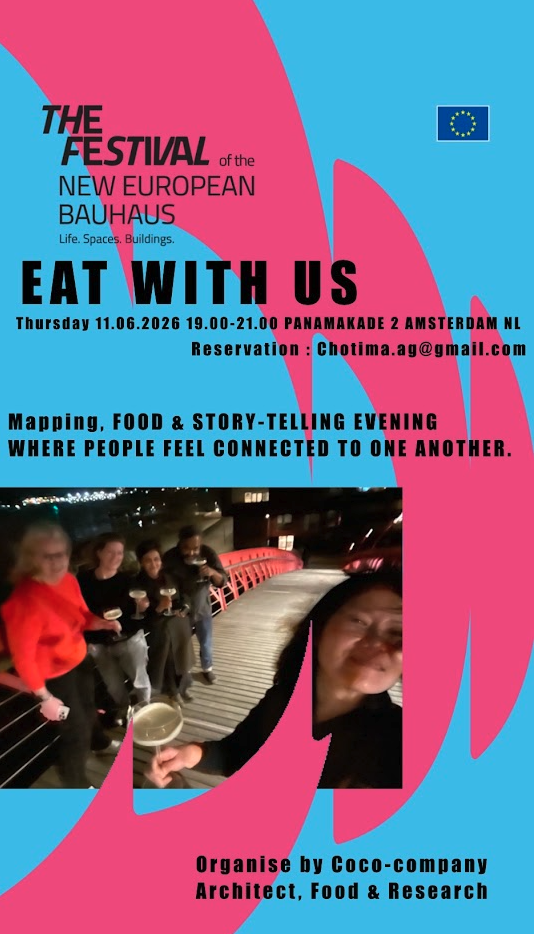
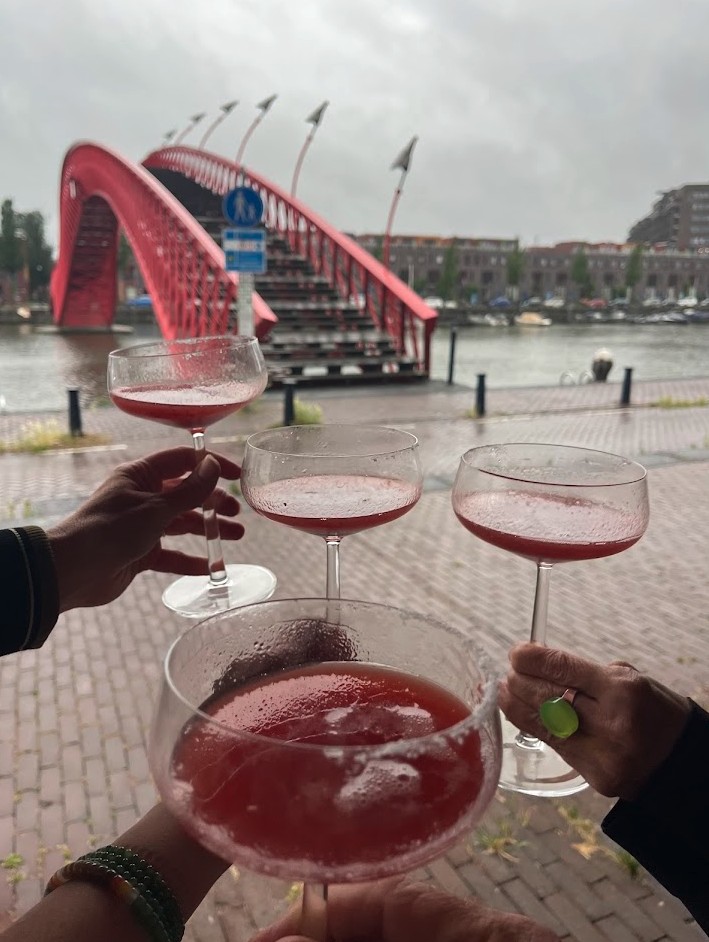
We put on regular food and drink events to bring people together. Our mission is simple: help make the city more inclusive, connected, and livable. The series started in Nov 2025, monthly …
Stories Night
eatscape & community
Community’s cook between 2018-2024, serving home-cooked food to 30 families in Amsterdam East and North 2 days per week. Affordable 3-course vegetarian meals with a focus on a wide variety of ingredients made freshly. Zero-waste cooking and delivery with all reusable food containers. Delivery was an im part of the social exchange.
Taste as the connector
Exploring other ways of communication, using “taste as a connector” to connect conference visitors and their dinner party’s meal. The quadrennial joint meeting attracted more than 3,300 Science and Technology scholars. Our catering worked on the theme of making & doing and its impact on social challenges. Read more EASST 2024
eatscape & city making
People sitting together on a sidewalk form a temporary landscape in a locality. Good food & good company create a warm atmosphere even in a troublesome neighbourhood like the red light district here in Amsterdam.
collaboration with Concrete Amsterdam
zero-waste menu
Exploring and developing the menu, cooking methods and eating ways toward sustainable living.
collaboration with Concrete Amsterdam
community & recipe
We focus on community building and recipe sharing among local residents, together Cascoland and more partners, creating spaces for exchange and connection. By bringing everyday cooking knowledge from diverse ethnic groups and their domestic kitchens into shared public settings, we value, make visible and develop common projects where people and their practices quietly sustain and strengthen our community.
in collaboration with Cascoland
research through foodways
Initiate conversations with local residents about energy consumption. Through a co-creation process and the use of food as a method, information and new inputs for building renovation were collected. Foodways was used to approach and open up the dialogues.